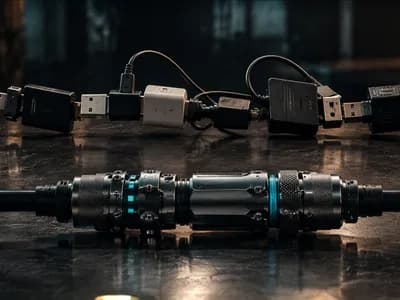

In 2026, the traditional "Build vs. Buy" debate has shifted from a simple capital expenditure calculation to a complex evaluation of long-term agility and data sovereignty. For the modern CFO, the "Sticker Shock" of custom software development often masks the insidious, compounding costs of "SaaS Sprawl" and "Vendor Lock-in".
The primary challenge is no longer just "getting the software," but ensuring that the software can integrate with the burgeoning Agentic AI infrastructure required to remain competitive. Buying an off-the-shelf solution often means inheriting a rigid architecture that acts as a silo, trapping your enterprise data and preventing the deployment of intelligent agents.
Custom Software vs. Off-the-Shelf ROI in 2026
While SaaS (Software as a Service) offers a lower initial barrier to entry, the Total Cost of Ownership (TCO) over a 3-to-5-year horizon often reveals a different reality.
The Hidden Costs of "Buying":
- Licensing Escalation: SaaS vendors are increasingly moving toward "Value-Based Pricing" or "Per-Agent" fees, which can cause costs to balloon as your company scales.
- The Integration Tax: Connecting a generic tool to your legacy ERP or on-premise SQL often requires expensive third-party middleware or specialized "API wrappers".
- Feature Rigidity: When a platform doesn't support a specific workflow, such as a proprietary logistics load booking process, the "manual workaround" creates a massive operational drain.
The ROI of "Building":
By treating custom software as an appreciating asset rather than a recurring expense, enterprises gain:
- Zero Licensing Leakage: Once built, the marginal cost of adding users is near zero.
- Competitive Differentiation: You own the intellectual property (IP) of the workflows that make your business unique.
- AI Readiness: Custom builds are designed from day one with Python RAG pipelines and API layers that allow AI to "read" and act upon your data.
TCO of Enterprise Software: The "Missing Middle" Analysis
The research into the 2026 market identifies a "Missing Middle" where most software projects fail. Generalist staffing agencies sell "hours," while SaaS tools sell "licenses". Neither addresses the engineering infrastructure needed to maintain a custom build sustainably.
Initial Investment
Buy (Off-the-Shelf): Low (Subscription / Setup)
Build (Custom Engineering): High (Development Phase)
Customization
Buy: Limited to APIs / Plugins
Build: Unlimited / Native
Data Sovereignty
Buy: Managed by Vendor
Build: Full Enterprise Control (+3)
AI Integration
Buy: Dependent on Vendor Roadmap
Build: Immediate / Agent-Ready (+1)
Long-term Total Cost of Ownership (TCO)
Buy: High (Cumulative Fees)
Build: Lower (Maintenance Only)
The OCE Solution Framework: High-Value Engineering Capacity
Oceans Code Experts (OCE) bridges the TCO gap by providing "AI-Ready Engineering Capacity" that mitigates the risks of custom development. We don't just provide "staffing"; we provide the human infrastructure to build and manage your proprietary assets.
By leveraging OCE’s Triple-A Framework, CFOs can shift custom software from a "risky expense" to a "strategic asset" with a predictable, managed TCO.
Strategic Next Steps
In 2026, "Buying" is a temporary fix; "Building" is a long-term strategy. The total cost of ownership favors the enterprise that owns its code, controls its data, and has the engineering capacity to orchestrate autonomous agents. Don't let the "Sticker Shock" of custom dev push you into a decade of SaaS dependency.
Ready to transform your technical debt into an AI-ready asset? Schedule a Consultation with OCE to audit your current "Build vs. Buy" strategy today.